 EcoSimLab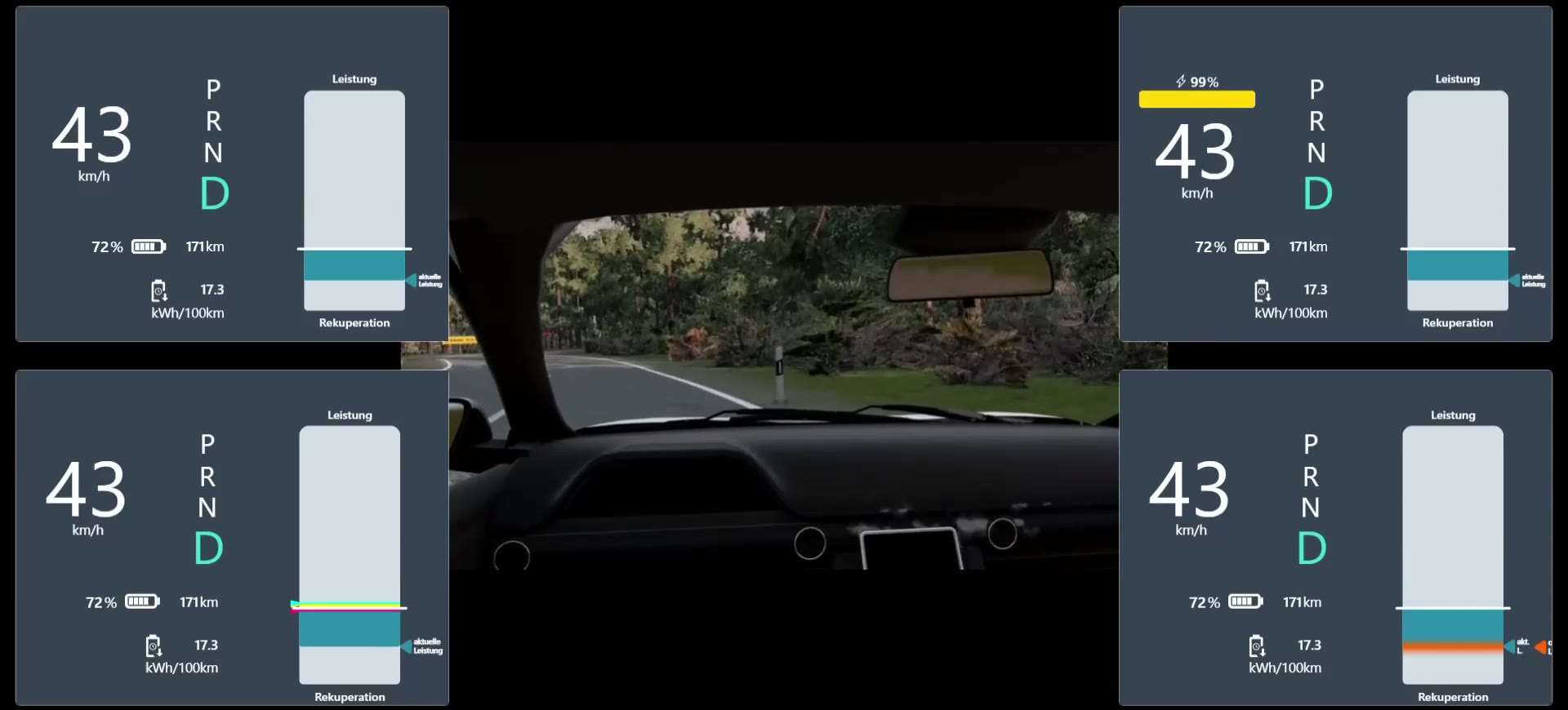
Eco-driving research, from the driving simulator to the browser.
EcoSimLab is the open toolkit of two research groups for studies on energy-efficient driving. The driving simulator lab, video studies in the browser and vehicle models work together. Everything is documented in the open and built for reuse.
Two labs for eco-driving research
Driving simulator lab
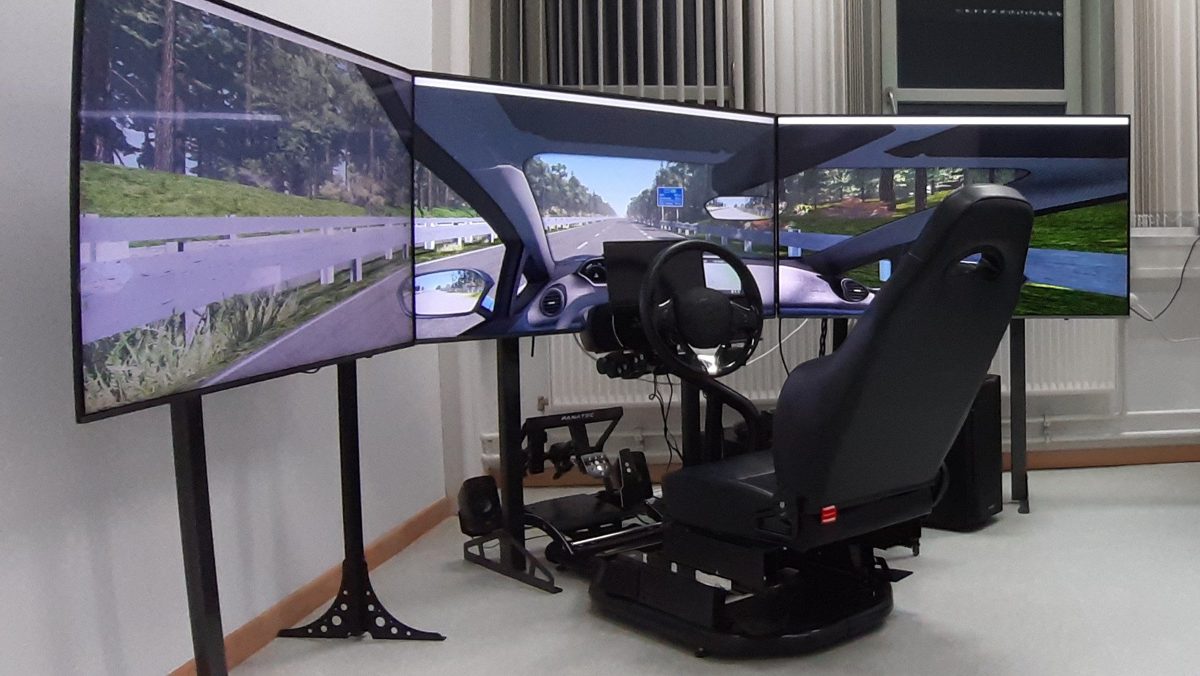
In the lab, participants drive themselves in a simulator built around the Renault Zoe. The displays run live from the simulation.
VideoSimLab
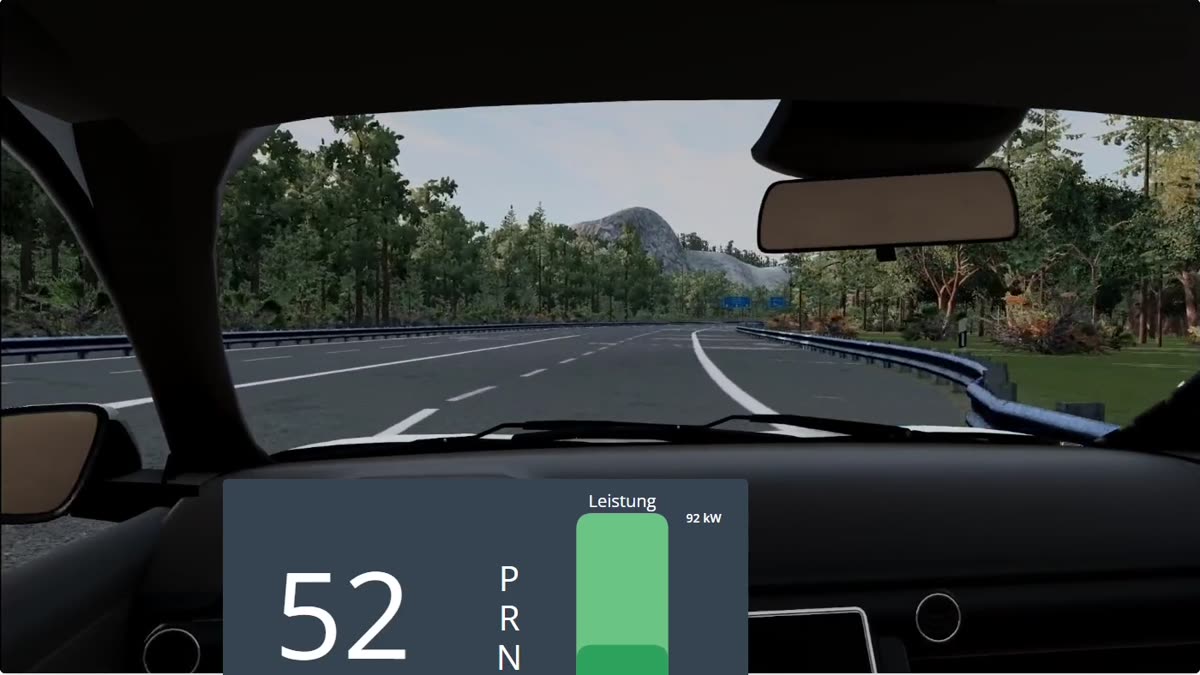
In the browser, participants watch recorded drives. The same displays run from the recorded data, in any place and with many people at once.
Our approach: eco-displays
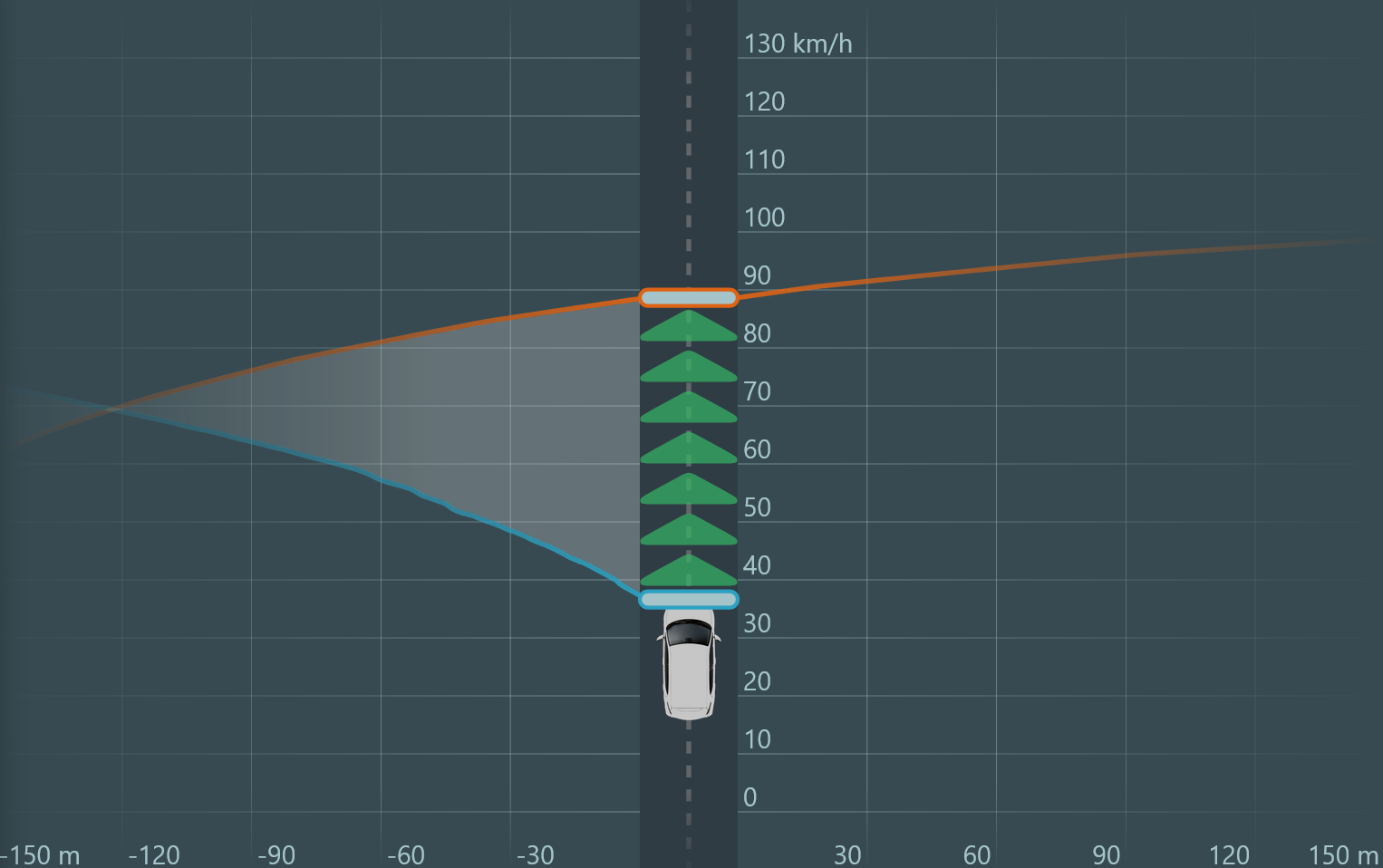
A core part of our research is EcoInterfaces: displays for the interaction between people and energy. They make consumption, recuperation and the optimal speed visible in the cockpit. This way drivers are more aware of energy and drive more efficiently.
The displays are built for more than one platform. They run in the driving simulator and in video studies in the browser, and they are made for tests in real vehicles. That closes the gap between virtual and physical environments: the same display is a function of the same driving data, wherever it runs.
Projects

AMORi 2.0
How can people and intelligent assistance systems work together to use energy efficiently? DFG project, June 2026 to November 2027.
AMORi
Action-integrated modelling and optimisation of the energy-related driver–vehicle interaction. DFG project 498999989, August 2022 to August 2025.

HI.Lübeck
Hansebelt Innovationsmatrix Lübeck: innovation and transfer with the partners on the Hanse Innovation Campus. BMFTR project 03IHS245B, January 2023 to December 2027.
Publications
- VideoSimLab: Developing a Video-Based Toolchain for Vehicle Display Evaluation StudiesJan Heidinger, Leonardt Wagner, Christopher Spölmink, Thomas Franke (2026). AutomotiveUI '26 (18th Intl. Conf. on Automotive User Interfaces)
- Understanding the knowledge gaps in ecodriving: analysis of knowledge accuracy, uncertainty, and action regulationVivien E. Moll, Jan Heidinger, Steffen Schmees, Daniel Görges, Thomas Franke (2026). Cognition, Technology & Work
- AI and Mobile Technologies for Driver Fatigue Detection: Sex Differences Revealed by Eye-Tracking MetricsJ. Bend, Markus Gödker, Thomas Franke (2025). International Journal of Interactive Mobile Technologies (iJIM), 19(11)
- Two Types of Eco-Driving Support — ICD & Optimal Speed DisplayMarkus Gödker, Steffen Schmees, Lukas Bernhardt, Daniel Görges, Thomas Franke (2025). International Journal of Human–Computer Interaction (IJHCI)